

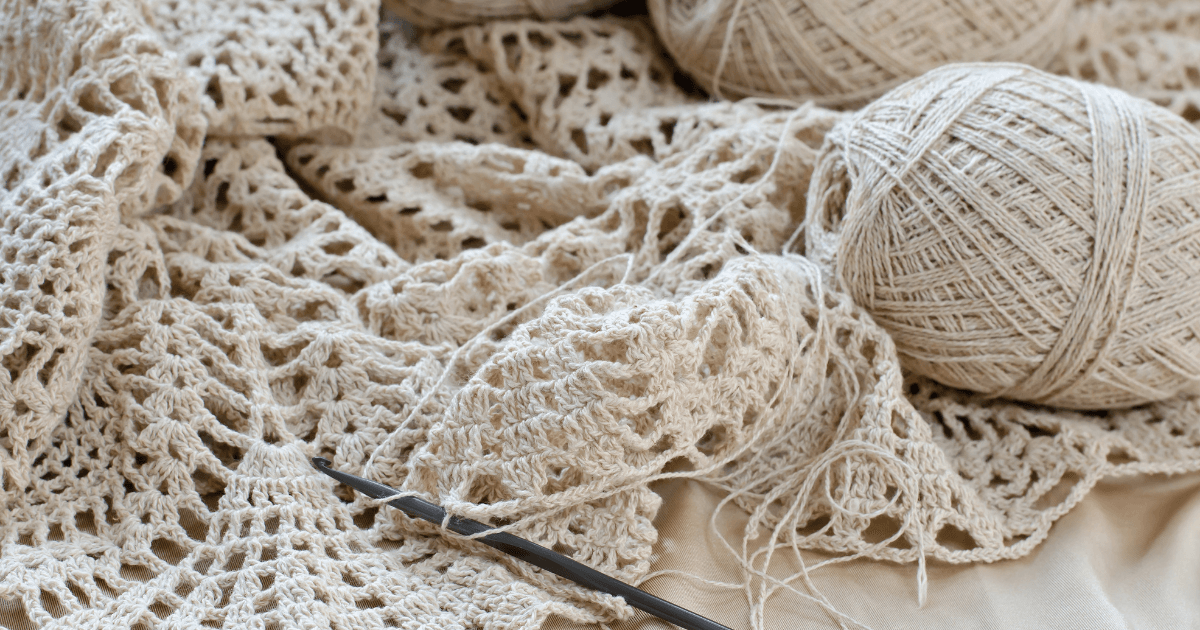
The Ultimate Reason I Choose Fingering Weight Yarn
Working with Fingering Weight Yarn doesn’t require advanced crochet skills. If you can crochet with worsted weight yarn, you already know the basic movements you need.
What changes is the scale.
Lighter yarn means more stitches per inch. That gives you finer detail, more movement in the fabric, and a finished project that feels lighter in your hands and on your body.
Your tension may matter a bit more. Your gauge awareness becomes more important. Your project may work up more slowly than a chunky cowl or bulky blanket.
That slower pace is not a problem. It is part of what makes Fingering Weight Yarn so useful.
When you crochet with fingering weight yarn, you have the chance to create fabric with more precision. Lace patterns open beautifully. Colorwork can stay crisp. Cables and texture have room to show. Each stitch has space to do its job.
Why I Keep Choosing Fingering Weight Yarn
I have been designing crochet patterns for more than 27 years, and I return to fingering weight yarn for very specific reasons. It gives me the kind of finished fabric I want my crocheters to experience.
It is not just about making something thinner. It is about making something that moves well, wears well, and looks intentional.
Fingering Weight Yarn Creates Beautiful Drape
Drape is one of the biggest reasons I love fingering weight yarn.
A shawl made with fingering weight yarn does not just sit on your shoulders. It flows. It moves with your body. It has softness and elegance without needing a complicated stitch pattern.
Garments made with lighter weight yarns can hang beautifully instead of feeling stiff or bulky. A cardigan worked in fingering weight yarn can have movement and shape without adding extra weight. That makes the finished piece easier to wear and easier to style.
If you have ever made a crochet garment that felt too heavy, too thick, or too structured, yarn weight may have been part of the issue. Fingering weight crochet gives you another option.
Fingering Weight Yarn Shows Stitch Definition
Stitch definition matters, especially when you are learning a new crochet technique.
With bulkier yarns, texture can sometimes get lost. Lace openings may close up. Detailed stitch patterns can blur together. The yarn may be doing so much visually that the stitches are harder to read.
Fingering weight yarn gives each stitch more room to show.
That clear stitch definition is helpful when you are learning. When you can see your stitches clearly, you can figure out where you are in the pattern more easily. You can catch mistakes sooner. You can understand how the stitch pattern is building across the row or round.
This is one reason I do not see fingering weight yarn as something only advanced crocheters can use. In many cases, it can make the fabric easier to read.
Fingering Weight Crochet Is Wearable
Wearability is another reason I use fingering weight yarn so often.
I live in the Pacific Northwest, where layering is useful for much of the year. Fingering weight shawls, wraps, scarves, and cardigans add warmth without bulk. They can be worn over a shirt, under a coat, or tucked into a bag for later.
A fingering weight shawl can work in summer when the air conditioning is too cold. It can work in fall when you want one more layer. It can work in winter under a coat without making you feel bundled past the point of comfort.
That matters.
When you spend time making something by hand, you want to reach for it often. Fingering weight crochet projects can become the pieces you actually wear, not the ones that only come out on the coldest day of the year.
Fingering Weight Projects Can Last
A well made fingering weight project can feel special without being fussy.
Because the fabric is lighter and more refined, the finished piece often looks polished. A fingering weight shawl or lightweight crochet garment can look intentional, elegant, and professional.
The right yarn also matters. A smooth, well made fingering weight yarn can hold stitch definition beautifully. With proper care, many of these projects keep their shape and continue to look good over time.
That is one of the things I love most about lighter weight yarns. They give you the chance to make pieces that feel worth keeping.
How to Start Crocheting with Fingering Weight Yarn
If you have been curious about fingering weight yarn but have not tried it yet, start in a way that feels manageable.
Choose a small project first. A cowl, scarf, or simple shawl is a good place to begin. Save a full garment for later, after you have had some time to get used to the yarn in your hands.
Keep the stitch pattern simple. A basic mesh stitch, shell pattern, or easy repeat can look beautiful in fingering weight yarn because the yarn itself creates drape and flow. You do not need a complex lace chart for your first project.
Choose a yarn with good stitch definition. A smooth, plied fingering weight yarn is usually easier to work with when you are learning. Avoid fuzzy, heavily textured, or loosely spun yarns until you feel more comfortable seeing and reading your stitches.
Use a hook that gives you fabric you like. Do not choose your hook size based only on the yarn label. Make a swatch and pay attention to the fabric. Does it feel too tight? Does it have enough movement? Can you see the stitches clearly?
Go slowly at first. Fingering weight crochet is supposed to take more time than bulky crochet. That does not mean you are doing anything wrong. It means you are working at a scale that rewards patience.
You Do Not Need to Be an Expert
One of the biggest misunderstandings about fingering weight yarn is that you need special skills before you begin.
You do not.
You need the same basic crochet skills you already use. You need a little patience. You need to let your hands adjust to a smaller yarn. You need to give yourself time to see how the fabric grows.
That is all.
The first few rows may feel different. That is normal. Your hands are learning the scale. After a little time, the rhythm begins to settle in.
Why Fingering Weight Yarn Is Worth Trying
After nearly three decades of crochet design, I still choose fingering weight yarn for many of my patterns because I love the finished result.
I love the way the fabric moves. I love the way lace opens after blocking. I love the clean stitch definition. I love that a finished shawl can feel light, useful, and beautiful all at once.
When I finish a fingering weight shawl and block it for the first time, that moment still feels special. Spreading it out, pinning the points, and watching the lace open never gets old. The time spent on those smaller stitches is part of what makes the finished piece feel so satisfying.
If you have been curious about fingering weight yarn, start small. Choose a simple pattern. Pick a smooth yarn. Give yourself room to adjust.
You may find that lighter weight yarns are not something to avoid.
They may be exactly what your crochet has been waiting for.